Asumi's here...
I'm keen to join the focus group thing over the break, though i have to work at Elam helpdesk on;
Monday 9-5
Wed 1:30-5
Thurs 9-5
for the 2 weeks.
So much appreciated if we could meet other times.
But the most important person is the one who present work so don't worry if it's difficult...
cheers,
Asumi
Friday, August 29, 2008

Wednesday, August 27, 2008

Sunday, August 24, 2008

Saturday, August 23, 2008
The Century's Decline (1976)-Wislawa Szymborska
Our twentieth century was going to improve on the others.
It will never prove it now,
now that its years are numbered,
its gait is shaky,
its breath is short.
Too many things have happened
that weren't supposed to happen,
and what was supposed to come about
has not.
Happiness and spring, among other things,
Were supposed to be getting closer.
Fear was expected to leave the mountains and the valleys.
Truth was supposed to hit home
before a lie.
A couple of problems weren't going
to come up any more:
hunger, for example,
and war, and so forth.
There was going to be respect
For helpless people's helplessness,
trust, that kind of stuff.
Anyone who planned to enjoy the world
is now faced
with a hopeless task.
Stupidity isn't funny
Wisdom isn't gay.
Hope
isn't that young girl any more
et cetera, alas.
God was finally going to believe
in a man both good and strong,
but good and strong
are still two different men.
"How should we live?" someone asked me in a letter.
I had meant to ask him
the same question.
Again, as ever,
as may be seen above,
The most pressing questions
are naïve ones.
It will never prove it now,
now that its years are numbered,
its gait is shaky,
its breath is short.
Too many things have happened
that weren't supposed to happen,
and what was supposed to come about
has not.
Happiness and spring, among other things,
Were supposed to be getting closer.
Fear was expected to leave the mountains and the valleys.
Truth was supposed to hit home
before a lie.
A couple of problems weren't going
to come up any more:
hunger, for example,
and war, and so forth.
There was going to be respect
For helpless people's helplessness,
trust, that kind of stuff.
Anyone who planned to enjoy the world
is now faced
with a hopeless task.
Stupidity isn't funny
Wisdom isn't gay.
Hope
isn't that young girl any more
et cetera, alas.
God was finally going to believe
in a man both good and strong,
but good and strong
are still two different men.
"How should we live?" someone asked me in a letter.
I had meant to ask him
the same question.
Again, as ever,
as may be seen above,
The most pressing questions
are naïve ones.
Quotes and thoughts for Karena...
Ref: Karena 22/08/08
All quotes from S. Sontag. Regarding the Pain of Others. I finished reading it You are welcome to take it, Karena… (but please don't return to Library) it’s on my desk.
The quotes are of my interest as well as I think has relation to the things Karena mentioned.
…tragic past does not sit well with the founding (of the nation),… P88.
Whom do we wish to blame? Who do we think we have the rights to blame?... P93.
When there are photographs, a war becomes “real”. P104.
Denunciation of a particular conflict and attribution of specific crimes will become a denunciation of human cruelty, human savagery as such. The photographer’s intentions are irrelevant to this larger process… P122.
We don’t understand. We don’t get it. We truly can’t imagine what it was like. We can’t imagine how dreadful, how terrifying war is. And how normal it becomes… Can’t understand and can’t imagine. That is how (those who have been in a war) feels. And they are right. P125.
……………………….
Therefore I want to know. Therefore I enjoy imagining, almost fantasising, about all the horrors and dread. And paradoxically, to keep enjoying this wicked fantasy, I must never succeed to understand or be in the situation in reality….
Also remembering a dialogue of a writer with someone…
When he travelled to Cuba, he asked the locals how they were during ‘Cuba Crisis’, they answered ‘what crisis?’, ‘ what are you talking about?’ To them, the everyday was everyday, when western media was stirring American anxiety. And Cuba was and has been always, from western standard, in a mundane turmoil...
(well, the article I read must be at least 10years old so I don’t know about now though…)
A. Mizuo
All quotes from S. Sontag. Regarding the Pain of Others. I finished reading it You are welcome to take it, Karena… (but please don't return to Library) it’s on my desk.
The quotes are of my interest as well as I think has relation to the things Karena mentioned.
…tragic past does not sit well with the founding (of the nation),… P88.
Whom do we wish to blame? Who do we think we have the rights to blame?... P93.
When there are photographs, a war becomes “real”. P104.
Denunciation of a particular conflict and attribution of specific crimes will become a denunciation of human cruelty, human savagery as such. The photographer’s intentions are irrelevant to this larger process… P122.
We don’t understand. We don’t get it. We truly can’t imagine what it was like. We can’t imagine how dreadful, how terrifying war is. And how normal it becomes… Can’t understand and can’t imagine. That is how (those who have been in a war) feels. And they are right. P125.
……………………….
Therefore I want to know. Therefore I enjoy imagining, almost fantasising, about all the horrors and dread. And paradoxically, to keep enjoying this wicked fantasy, I must never succeed to understand or be in the situation in reality….
Also remembering a dialogue of a writer with someone…
When he travelled to Cuba, he asked the locals how they were during ‘Cuba Crisis’, they answered ‘what crisis?’, ‘ what are you talking about?’ To them, the everyday was everyday, when western media was stirring American anxiety. And Cuba was and has been always, from western standard, in a mundane turmoil...
(well, the article I read must be at least 10years old so I don’t know about now though…)
A. Mizuo
Thursday, August 21, 2008
Um, hmmmmmmm!
Hi All
Here is a brief description of where I’m at with my work
I have had lots of starts this year, none of which seem to have led anywhere, there seems to be a problem of investing in things. There have been moments of interest but the intention behind it has been confused and without direction, which meant there was no clear criteria for making decisions.
Earlier in the year I had narrowed my interests to the relationship between viewer and image, the seduction and disruption of perception (if you can call that narrowing!). This led to placing images on windows and rephotographing them including the scene out the window, resulting in a kind of optical illusion.
While this met some of my interests, to me it really didn’t feel like ‘my’ work.
The qualities of my work that I enjoy are decadence, obsession, decoration and dreaminess, which I always return to without really knowing why. I felt I wasn’t achieving these goals; that the photographs were dry and lacked the qualities I enjoy. As a result I was not happy making them.
I have come to realise that the way in which I view images is one of enchantment and escapism. They all connect to the bigger world behind what I’m looking at. It is this bigger world of portals that I would like to explore. Perhaps this is better interpreted as an interest in imagination.
I have identified what interests me but I don’t have anything that binds these interests. I still don’t know what position I’m taking, what’s that big motivating question I am asking that will give my work direction?
I have tried to simplify in order to understand by doing what comes most naturally, collecting images that appeal to me. This has been something that has been the fundamental part of my practice for a long time.
I have been looking at the images and trying to find some continuity. Why choose some images and not others? A lot of them seem to present me with moments of escape, moments of idealism, beauty, drama, nostalgia, narrative. I see decoration as a way of enhancing or connecting these moments of enchantment, or providing its own. There is also an interest in formal issues such as spatial concerns, surface and the materiality of the image as an object
I don’t think the group can provide me my ‘big question’ but perhaps helping me to identify what is happening with these images, as a whole would be helpful.
Is there a larger connection between these images?
What do you feel is being communicated here?
Is this interesting?
I hope this will be helpful.
Cheers
Bex
Here is a brief description of where I’m at with my work
I have had lots of starts this year, none of which seem to have led anywhere, there seems to be a problem of investing in things. There have been moments of interest but the intention behind it has been confused and without direction, which meant there was no clear criteria for making decisions.
Earlier in the year I had narrowed my interests to the relationship between viewer and image, the seduction and disruption of perception (if you can call that narrowing!). This led to placing images on windows and rephotographing them including the scene out the window, resulting in a kind of optical illusion.
While this met some of my interests, to me it really didn’t feel like ‘my’ work.
The qualities of my work that I enjoy are decadence, obsession, decoration and dreaminess, which I always return to without really knowing why. I felt I wasn’t achieving these goals; that the photographs were dry and lacked the qualities I enjoy. As a result I was not happy making them.
I have come to realise that the way in which I view images is one of enchantment and escapism. They all connect to the bigger world behind what I’m looking at. It is this bigger world of portals that I would like to explore. Perhaps this is better interpreted as an interest in imagination.
I have identified what interests me but I don’t have anything that binds these interests. I still don’t know what position I’m taking, what’s that big motivating question I am asking that will give my work direction?
I have tried to simplify in order to understand by doing what comes most naturally, collecting images that appeal to me. This has been something that has been the fundamental part of my practice for a long time.
I have been looking at the images and trying to find some continuity. Why choose some images and not others? A lot of them seem to present me with moments of escape, moments of idealism, beauty, drama, nostalgia, narrative. I see decoration as a way of enhancing or connecting these moments of enchantment, or providing its own. There is also an interest in formal issues such as spatial concerns, surface and the materiality of the image as an object
I don’t think the group can provide me my ‘big question’ but perhaps helping me to identify what is happening with these images, as a whole would be helpful.
Is there a larger connection between these images?
What do you feel is being communicated here?
Is this interesting?
I hope this will be helpful.
Cheers
Bex
Monday, August 18, 2008
karena's project background
Hi, I have posted a backgrounder to my project on my blog (karena's blog over there >), and will add some images, sound and maybe video this week. Click for link. xk
Saturday, August 16, 2008
Blog link
I've uploaded some new work (in progress) on my blog. and added the link right hand side of this blog...
any feed back will be appreciated.
cheers,
Asumi
any feed back will be appreciated.
cheers,
Asumi
Friday, August 15, 2008
Slump


Slump.
I’m interested in the state of slumping. I’m not in one at the minute, but the potential is there. The drop, the sag, its always just around the corner. On the other hand slumping can be positive. It’s only a down swing after all, and a downswing is prone to an up swing, or so physics tells me. One needs the other, which needs the other, and so it goes.
A slump is by definition short term, which is cause for celebration.
Me? I like to think of it as a problem of traction, a speed equation. When you’re riding smooth speed just happens, the world moves past as you move forward, like steps on the pavement. That is until a shift takes place. Either in the landscape, or in the climate, or in you for that matter. A shift which marks the on set of a slump. And just like that it’s on you, you’re in a sinkhole.
It's slow going stuck in a sinkhole, the drag slows your speed, you begin to note the pace. Tempo, velocity, these things matter now.
Slump.
The word sounds like it feels. Sagging after a stroke, concrete grey, weight on the chest.
But a slump is also a dip. It has form and shape to go with the feeling. At the bottom sits a level flanked by two gradients, both up, both down, dependent on perspective. Thanks to gravity no matter which way you enter a slump your first move is always down, helpful considering the extra momentum. What’s left is up, a plane where traction is not only smart its a necessity. Yes, to go up, you need to find your feet, to watch them hard and make small decisions. Either you start with the left or you start with the right. Your decisions from there follow one another sensibly, for a while at least. Left, followed by right, followed by left.
It’s the only way.
Slump.
Beth
Beth's Crit
Problem-position
Everyone needs a problem position. Outlines, parameters, these things give a measure to value. My problem-position?
I think it’s a question of where I place value not interest. I’ve often thought interest is too tame a word, it implies choice, which implies the option of detachment. Value on the other hand suggests worth, merit. Words which are not choices but treasures. Like heirlooms-except not nearly so forgotten.
So it’s best if I talk to my work in terms of value, not interest.
My position is that I place value in makeshift practices. In materials and gestures, which improvise, make-do, collapse after a time. There’s a value in the shoddy, the gawkish, a charm and a language in lousy assemblage. I see improvising as essentially a political act. There is power mixed with fragility in making-do, a worth in prizing the low tech. I take such practices to be one: full of hope, and two: emblematic of signs of life. These I think are the tools of innovation and the opposite of a drone.
I'd like to discuss these issues with the group. Get feedback on how these ideas sit with the work and with the reading "What's a conversation for" by Deleuze and Parnet.
Deleuze, Gilles,Dialogues 2, Columbia University Press, 1977.

Everyone needs a problem position. Outlines, parameters, these things give a measure to value. My problem-position?
I think it’s a question of where I place value not interest. I’ve often thought interest is too tame a word, it implies choice, which implies the option of detachment. Value on the other hand suggests worth, merit. Words which are not choices but treasures. Like heirlooms-except not nearly so forgotten.
So it’s best if I talk to my work in terms of value, not interest.
My position is that I place value in makeshift practices. In materials and gestures, which improvise, make-do, collapse after a time. There’s a value in the shoddy, the gawkish, a charm and a language in lousy assemblage. I see improvising as essentially a political act. There is power mixed with fragility in making-do, a worth in prizing the low tech. I take such practices to be one: full of hope, and two: emblematic of signs of life. These I think are the tools of innovation and the opposite of a drone.
I'd like to discuss these issues with the group. Get feedback on how these ideas sit with the work and with the reading "What's a conversation for" by Deleuze and Parnet.
Deleuze, Gilles,Dialogues 2, Columbia University Press, 1977.

Thursday, August 14, 2008
The rub
“To what extent should one involute?”
I don’t know if you have a choice Trent. I think it’s a matter of helpless focus. Things move around and either they remain important or not. Maybe it’s about making room. A little over here, under there, the need for less or more head space. Things which neither warrant attention nor demand attention are no longer required, so we drop them, or leave them behind.
Perhaps it’s a speed issue, like being able to run faster if you abandon pieces of luggage. I’m not sure really, but I like to think of involution in terms of “er”.
Smarter
Faster
Simpler
Except faster in this case means slower, more compact. The smarter, faster, more attuned you are, the more you shrink. Perhaps shrinking is a good thing? Perhaps smaller is better. In one of my favourite novels the author tells of his affection for small spaces. He describes his happiness as inversely proportionate to his living space. I suppose if you can touch all four walls around you physically or otherwise then there is solace to be found in that. It reminds me of something I read on a blog the other day:
Question
I own a young hermit crab, Finlay, who has never changed shells before. This is the first time. When I woke up he had left his first shell. He won't go into the new shells. I'm not sure why. Or what shell is best. What should I do?
Answer
Dear Hannah,
Thank you for your question.
It's usually a bad sign when a crab goes naked,
Make sure that the humidity is high, at least 80% to prevent him from drying out. You cannot do much more than keeping him moist and offering shells.
Be smart Trenton, Never be a naked crab.
All the best
Beth
I don’t know if you have a choice Trent. I think it’s a matter of helpless focus. Things move around and either they remain important or not. Maybe it’s about making room. A little over here, under there, the need for less or more head space. Things which neither warrant attention nor demand attention are no longer required, so we drop them, or leave them behind.
Perhaps it’s a speed issue, like being able to run faster if you abandon pieces of luggage. I’m not sure really, but I like to think of involution in terms of “er”.
Smarter
Faster
Simpler
Except faster in this case means slower, more compact. The smarter, faster, more attuned you are, the more you shrink. Perhaps shrinking is a good thing? Perhaps smaller is better. In one of my favourite novels the author tells of his affection for small spaces. He describes his happiness as inversely proportionate to his living space. I suppose if you can touch all four walls around you physically or otherwise then there is solace to be found in that. It reminds me of something I read on a blog the other day:
Question
I own a young hermit crab, Finlay, who has never changed shells before. This is the first time. When I woke up he had left his first shell. He won't go into the new shells. I'm not sure why. Or what shell is best. What should I do?
Answer
Dear Hannah,
Thank you for your question.
It's usually a bad sign when a crab goes naked,
Make sure that the humidity is high, at least 80% to prevent him from drying out. You cannot do much more than keeping him moist and offering shells.
Be smart Trenton, Never be a naked crab.
All the best
Beth
akiko's Friday critiques


My areas of research are:
Op shop societal links:
• Acknowledging multiples cycle of consumption
• Life history of material articles (Second-hand goods)
• What and where do articles come from and what has been their history hitherto?
• What is considered an ideal history for a given item and how was an object used and how did its status change within the institutional context?
• What happens when it is at the end of its useful life?
• Changing status of articles over time and the ways in which these goods produce social identity, which in turn is linked to lifestyle.
Repetition:
"Except in the context of some change or progression, any repetition taking place in advancing time is undiscussible. The growth of the work, even from one identical line to another, makes exact repetition impossible [...] Repetition is a nonverbal state; it cannot be committed to any art that occurs in time." (Kawin, Telling It Again and Again)
Keep it Simple, Stupid (Between, even!)
Beth, reading that Deleuze quote feels like there's something of a solution to many things; minor and major, micro and macro, cooking and the Gross Domestic Production of first world nations.
It sits well with me at the moment. I'm currently - and slowly - reducing the things I own and am responsible for. It's like a cleaning exercise I begun when I arrive back from travels. The idea was to free up my life a little - perhaps also a fantasy I've cooked up from the cool protagonists in Haruki Murakami novels (Wind Up Bird Chronicles, Kafka on the Shore).
It's hard though. The only good it's bought so far is that I'm finding things I thought were lost!… and then thoughtfully abandoning them.
"to what extent should one involute?"
There's the rub.
Criteria! Discipline! Vigilance!
Easy approaches aren't immune to difficulty.
Simplified ≠ Easier
or maybe it does sometimes.
I like to talk, draw, paint and write because it's the most straight forward option to working with an idea or feeling. Although I struggle with these things. Especially talking. which should come easiest as it's closest at hand (um… mouth): too much, too little, too stupid, too boring, too distracting.
On that note, Beth is sitting next to me as I write this. I was going to respond to her post through a little chit-chat but thought I'd leave her alone to her work.
Is that being involutionary?
Hi Beth. You look busy.
[Trenton]
It sits well with me at the moment. I'm currently - and slowly - reducing the things I own and am responsible for. It's like a cleaning exercise I begun when I arrive back from travels. The idea was to free up my life a little - perhaps also a fantasy I've cooked up from the cool protagonists in Haruki Murakami novels (Wind Up Bird Chronicles, Kafka on the Shore).
It's hard though. The only good it's bought so far is that I'm finding things I thought were lost!… and then thoughtfully abandoning them.
"to what extent should one involute?"
There's the rub.
Criteria! Discipline! Vigilance!
Easy approaches aren't immune to difficulty.
Simplified ≠ Easier
or maybe it does sometimes.
I like to talk, draw, paint and write because it's the most straight forward option to working with an idea or feeling. Although I struggle with these things. Especially talking. which should come easiest as it's closest at hand (um… mouth): too much, too little, too stupid, too boring, too distracting.
On that note, Beth is sitting next to me as I write this. I was going to respond to her post through a little chit-chat but thought I'd leave her alone to her work.
Is that being involutionary?
Hi Beth. You look busy.
[Trenton]
Thoughts on last week critiques.
The limits of production
During conversation last Friday the group briefly discussed what Jim described as the limits of production. During the weekend I came across a few paragraphs in Dialogues 2 that among other things, spoke of the path of production. Becoming as a matter of involuting; neither regression or progression.
To produce is to become more and more restrained, more and more simple, more and more deserted and for that reason very populated. This is what’s difficult to explain: to what extent one should involute. It is obviously the opposite of evolution, but it is also the opposite of regression. To involute is to take an increasingly simple, economical, restrained step. It is also true for cooking: against involutive cooking, which always adds something more, against regressive cooking which returns to primary elements, there is involutive cooking, which is perhaps that of the anorexic.
It is also true of life, even of the most animal kind: if the animals invented their forms and their functions, this was not always by evolving, by developing themselves, nor by regressing as in the case of prematureation, but by losing and abandoning, by reducing, by simplifying, even if this means creating new elements and new relations of this simplification. Experimentation is involutive, the opposite of the overdose. It is also true of writing; to reach this sobriety, this simplicity which is neither the end nor the beginning of something new. To involute is to be ‘between’, in the middle, adjacent, en route (Deleuze 28-31).

Deleuze, Gilles,Dialogues 2, Columbia University Press, 1977.
Beth
During conversation last Friday the group briefly discussed what Jim described as the limits of production. During the weekend I came across a few paragraphs in Dialogues 2 that among other things, spoke of the path of production. Becoming as a matter of involuting; neither regression or progression.
To produce is to become more and more restrained, more and more simple, more and more deserted and for that reason very populated. This is what’s difficult to explain: to what extent one should involute. It is obviously the opposite of evolution, but it is also the opposite of regression. To involute is to take an increasingly simple, economical, restrained step. It is also true for cooking: against involutive cooking, which always adds something more, against regressive cooking which returns to primary elements, there is involutive cooking, which is perhaps that of the anorexic.
It is also true of life, even of the most animal kind: if the animals invented their forms and their functions, this was not always by evolving, by developing themselves, nor by regressing as in the case of prematureation, but by losing and abandoning, by reducing, by simplifying, even if this means creating new elements and new relations of this simplification. Experimentation is involutive, the opposite of the overdose. It is also true of writing; to reach this sobriety, this simplicity which is neither the end nor the beginning of something new. To involute is to be ‘between’, in the middle, adjacent, en route (Deleuze 28-31).

Deleuze, Gilles,Dialogues 2, Columbia University Press, 1977.
Beth
Tuesday, August 12, 2008
pain and portraits


Hi, I was watching Jp TV streaming... (well I shouldn't be watching it... I should be reading something else...)
anyway, the TV programme was showing this artist... Maybe Trenton might be interested? or Bex? Since you are the only figurative painters. and Karena? in terms of feminism/gender issue? I don't know... Her name is Fuyuko Matsui. Google it and you will find plenty English stuff... Cheers.
Monday, August 11, 2008
T U I K E R E H O M A
Hi all, to those who were aware of my seminar tomorrow: it has been cancelled till further notice. Hope you get this message :)
Friday, August 8, 2008
Asumi -Friday session
My critique session features 4 separate works...
A series of cataloguing unimportant objects with no historical significance and traces of people who had no glorious achievement or tragic death. (on-going)
A pair of photographs in Taipei Airport.
‘Declined’ –mock-up online curation. See older post below.
‘They are my cousins’
Would like to discuss on the ideas/concept of:
-validity of ownership, logic of selection.
-Acquisition/purchase of second hand nostalgia.
-privatisation of discarded memento.
-replaceablility, representability, and disowned memory
-Significance of absence, refusal and rejection.
etc...
in relation to the work.
Is it working?
Is it effective?
What's intereting to you?
or is interesting at all??
Hope I can get up tommorow...
A series of cataloguing unimportant objects with no historical significance and traces of people who had no glorious achievement or tragic death. (on-going)
A pair of photographs in Taipei Airport.
‘Declined’ –mock-up online curation. See older post below.
‘They are my cousins’
Would like to discuss on the ideas/concept of:
-validity of ownership, logic of selection.
-Acquisition/purchase of second hand nostalgia.
-privatisation of discarded memento.
-replaceablility, representability, and disowned memory
-Significance of absence, refusal and rejection.
etc...
in relation to the work.
Is it working?
Is it effective?
What's intereting to you?
or is interesting at all??
Hope I can get up tommorow...
Thursday, August 7, 2008
MEETING FRIDAY 9AM ALL MFA
Hi Guys
My rep hat is currently on...
If you do happen to check this before tomorrow ..there will be a meeting for all MFA students tomorrow morn at 9am in the presentation space to discuss what is going on with the studios and what we would like to say to Nuala about the whole thing. I have a bit of an idea with what we should present as our opinion/requests but as discussed with others we need to formulate a united front. My socialist regime dream has finally arrived..
Cheers
Fiona
My rep hat is currently on...
If you do happen to check this before tomorrow ..there will be a meeting for all MFA students tomorrow morn at 9am in the presentation space to discuss what is going on with the studios and what we would like to say to Nuala about the whole thing. I have a bit of an idea with what we should present as our opinion/requests but as discussed with others we need to formulate a united front. My socialist regime dream has finally arrived..
Cheers
Fiona
JWK Info pt 4
Hi all -
Jim, Fi and I just convened to decide an approach for tomorrows crit session, we decided to set a loose agenda that is not predicated on the specific works in the show, instead being focussed on meta-level concerns of production.
So I have given you images of a body of work from some relevant artists to my sculptural concerns- that post below is fi giving a link to Armleder.
We think the work should perhaps act as a springboard to a larger conversation, and if that conversation ends up not having anything to do with the specific works then so be-it.(note - I'm not asking for a lasses-faire session)
So for my part, i guess I'm asking a pretty broad question - How can the presentation of materials in space be relevant to life. Sculpture, basically... whoah deep.
Jim, Fi and I just convened to decide an approach for tomorrows crit session, we decided to set a loose agenda that is not predicated on the specific works in the show, instead being focussed on meta-level concerns of production.
So I have given you images of a body of work from some relevant artists to my sculptural concerns- that post below is fi giving a link to Armleder.
We think the work should perhaps act as a springboard to a larger conversation, and if that conversation ends up not having anything to do with the specific works then so be-it.(note - I'm not asking for a lasses-faire session)
So for my part, i guess I'm asking a pretty broad question - How can the presentation of materials in space be relevant to life. Sculpture, basically... whoah deep.
John M Armleder for Friday
This may be useful for some contextual thinking. I'll post specific passage references when I have a sec later.
http://heyokamagazine.com/HEYOKA.4.SCULPT.JohnArmleder.htm
http://heyokamagazine.com/HEYOKA.4.SCULPT.JohnArmleder.htm

Wednesday, August 6, 2008
Declined - 'curated' by A.Mizuo


Selected from a series of Hiroshima by Hiromi Tsuchida. http://www.hiromi-t.com/hiroshima.php
The series documentary/reportage of the grown-ups whose essay was published in 'Children of A-bomb', an anthology of essays of children's experience of the bombing.
The texts under photographs are;
name, age,
Then: age, place (distance from ground zero), family casualty
Now: place, occupation, family structure
Quote from the book. (age of writing)
The selection shows the photos which the people declined to be photographed or included in his work.
Tuesday, August 5, 2008
forgotten bar project
in collaboration with l.a. artist fabian schubert i'm also invited to contribute work within the forgotten bar project.
have a look and also check out the 'past' and 'current' links. very interesting artists and works.
http://galerieimregierungsviertel.org/
The FORGOTTEN BAR PROJECT opened on Tuesday, July 1, 2008 with a GRAND OPENING and runs throughout the summer with a program of an exhibition opening every day! The FORGOTTEN BAR PROJECT is initiated by GALERIE IM REGIERUNGSVIERTEL, BERLIN in cooperation with the artists and curatos to provide an interface for contemporary strategies and activities in art and culture as well as a resort for artists in Berlin Kreuzberg.
have a look and also check out the 'past' and 'current' links. very interesting artists and works.
http://galerieimregierungsviertel.org/
The FORGOTTEN BAR PROJECT opened on Tuesday, July 1, 2008 with a GRAND OPENING and runs throughout the summer with a program of an exhibition opening every day! The FORGOTTEN BAR PROJECT is initiated by GALERIE IM REGIERUNGSVIERTEL, BERLIN in cooperation with the artists and curatos to provide an interface for contemporary strategies and activities in art and culture as well as a resort for artists in Berlin Kreuzberg.
posted from boris
hi guys, i'm posting you from europe with some things that are relavent to me at the moment.
i've been in croatia for quite a while where i got interested in transformations and mutations (in a wider sense).
transformation of political circumstances; in the last decade croatian society saw some major changes: from a former socialistic society to postwar status entering the age of globalization, free market, capitalization and joining the european union soon. a big issue is the question of land ownership and its current effect on society and cultural heritage. i have been looking at cases in one to one conversation where poeple were selling their land. it seems economic reasons are the main factor but in many cases skyrocketing landprizes make the people sell and leave their property, settle somewhere cheaper instead and live off the money. houseselling of land where families have lived for centuries (the average age of a house within old settlement area is 200) becomes an alternative way of making business. what happens is that people who were part of a long grown environment are shifting somewhere else. these developments are of new quality - triggered by external interests. these external interests become more a dominating force in the region of former yugoslavia. since my last visit it seems that relations to western europe are still not developed in a healthy way; there is an unreflected fascination and mystification with everything that is 'abroad'. objectively there has never been a time-window for the young generation to fully develop their "own thing" and find some form of identity within the eu and the sorrounding non eu states - apart from the nineties where there was an absence of communication with the rest of europe. at that time they were out of touch with worlds current events and things began to happen from the inside. the young people started to refer to itself and to the world they were immersed in. from this point the impact of western ideas how to consume what, interrupted the provisional autonomous state of "being" the youth just started to build up for themselves. however this impact delivered a philosophy of capitalism that was tailored to fill what must have looked like a big hole in the eyes of a businessman. while i was staying here i just couldn't get enough to physically engage with everything that remained somehow from functioning as a new platform for some star-bucks-spangled economic dreams. everybody here is now doing their best of being, talking, moving, selling, economizing like they have seen it in other countries on tv. the guy from my favourite coffee place was really happy when he told me that he's got music in his toilet now. he saw it in germany and what the germans have he must have too. after all the germans know how to make money and the guest like the chill-out trance while taking a dump. so if everybody is trying really hard to do their thing i thoght i'm gonna give it a try too and build my own value system from the scratch. i started out at places that were not claimed yet, because they are too hard to claim or of no use to a money focused mind. yet. maybe after my work's out there, some people will discover some really great spots where they could do some business. that would be even better : eventually i'm keen to see how these real and imaginary places to be "reclaimed" in capitalistic means. this seems to be an uncontrollable organic process somehow. it's like cell mutation. you don't know how fast it grows and what exactly makes it growing. there are a million little components that encourage cell mutation. the world is full of them and we're creating new substances every second of our being.
so guys, the 'outcome' of my engagement with these places will result in a multi channel video installation and i posted some stills of it that you can catch a glimpse. the format is wrong - it shoud be 16:9 but blogspot somehow doensn't seem to like that
:)


i've been in croatia for quite a while where i got interested in transformations and mutations (in a wider sense).
transformation of political circumstances; in the last decade croatian society saw some major changes: from a former socialistic society to postwar status entering the age of globalization, free market, capitalization and joining the european union soon. a big issue is the question of land ownership and its current effect on society and cultural heritage. i have been looking at cases in one to one conversation where poeple were selling their land. it seems economic reasons are the main factor but in many cases skyrocketing landprizes make the people sell and leave their property, settle somewhere cheaper instead and live off the money. houseselling of land where families have lived for centuries (the average age of a house within old settlement area is 200) becomes an alternative way of making business. what happens is that people who were part of a long grown environment are shifting somewhere else. these developments are of new quality - triggered by external interests. these external interests become more a dominating force in the region of former yugoslavia. since my last visit it seems that relations to western europe are still not developed in a healthy way; there is an unreflected fascination and mystification with everything that is 'abroad'. objectively there has never been a time-window for the young generation to fully develop their "own thing" and find some form of identity within the eu and the sorrounding non eu states - apart from the nineties where there was an absence of communication with the rest of europe. at that time they were out of touch with worlds current events and things began to happen from the inside. the young people started to refer to itself and to the world they were immersed in. from this point the impact of western ideas how to consume what, interrupted the provisional autonomous state of "being" the youth just started to build up for themselves. however this impact delivered a philosophy of capitalism that was tailored to fill what must have looked like a big hole in the eyes of a businessman. while i was staying here i just couldn't get enough to physically engage with everything that remained somehow from functioning as a new platform for some star-bucks-spangled economic dreams. everybody here is now doing their best of being, talking, moving, selling, economizing like they have seen it in other countries on tv. the guy from my favourite coffee place was really happy when he told me that he's got music in his toilet now. he saw it in germany and what the germans have he must have too. after all the germans know how to make money and the guest like the chill-out trance while taking a dump. so if everybody is trying really hard to do their thing i thoght i'm gonna give it a try too and build my own value system from the scratch. i started out at places that were not claimed yet, because they are too hard to claim or of no use to a money focused mind. yet. maybe after my work's out there, some people will discover some really great spots where they could do some business. that would be even better : eventually i'm keen to see how these real and imaginary places to be "reclaimed" in capitalistic means. this seems to be an uncontrollable organic process somehow. it's like cell mutation. you don't know how fast it grows and what exactly makes it growing. there are a million little components that encourage cell mutation. the world is full of them and we're creating new substances every second of our being.
so guys, the 'outcome' of my engagement with these places will result in a multi channel video installation and i posted some stills of it that you can catch a glimpse. the format is wrong - it shoud be 16:9 but blogspot somehow doensn't seem to like that
:)


JWK Info part 3
Ok - maybe a bit of overkill on the info front - but i thought I'd post some of the artists whose practices I see myself drawing frameworks from, to posit my work in a sort of are of sculptural inquiry.
Gonzalez-Torres

Perfect lovers:

Gabriel Orozco


Sleeping Dog, My hands are my heart, cats on watermelons etc
Gabriel Kuri


Gum on tree, receipts in door, bags on fan, plastic cup on overhead projector
Giovanni Anselmo


Bernini


Ok the bernini thing is not ideological but about how depicted forms of fabric during the baroque shifted from supple gravity affected things to an order more similar to architecture.
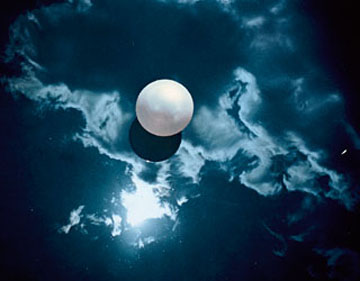
Zilvinas Kempinas
 This one that looks like the moon is just a cardboard tube held against the wall so a little bit of light creeps in. Dont have an external shot of it but you can see it at this website:
http://www.spencerbrownstonegallery.com/Artists/Zilvinas_Kempinas/Zilvinas_Kempinas.html
and just for fun:
Gonzalez-Torres
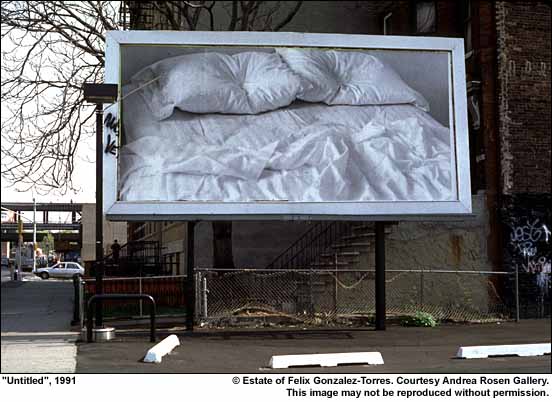
Perfect lovers:

Gabriel Orozco



Sleeping Dog, My hands are my heart, cats on watermelons etc
Gabriel Kuri


Gum on tree, receipts in door, bags on fan, plastic cup on overhead projector
Giovanni Anselmo


Bernini


Ok the bernini thing is not ideological but about how depicted forms of fabric during the baroque shifted from supple gravity affected things to an order more similar to architecture.
Zilvinas Kempinas
 This one that looks like the moon is just a cardboard tube held against the wall so a little bit of light creeps in. Dont have an external shot of it but you can see it at this website:
http://www.spencerbrownstonegallery.com/Artists/Zilvinas_Kempinas/Zilvinas_Kempinas.html
and just for fun:
JWK Info part 2
plus a little observational type essay text thing I put out to accompany the window show.
Notes on music.
Recently I was listening to music, music I had once enjoyed a great deal but had since neglected. At one point of my life I would have known all of the lyrics but now everything was vague. As I listened I knew that I knew the songs already, but couldn’t make them out ahead of time, so was always suspecting what was to come next, a sort of slow burning, exciting anxiety which is like flirting, or waking up from a good sleep.
I noticed a spider had taken up residence in the cone of one of the speakers and was moving in and out with the music, engaged in an unwitting duet. To the spider, the music that caused such a specific resonance within me mustn’t mean much as noise. What I hear as melody and rhythm and meaning must come across as a functional part of its landscape, more akin to weather than to meaning. To the spider, a bass riff may be like being buffeted by a strong wind. To the spider, a treble note may be like a breath on the shoulder.
There is this wonderful thing that happens sometimes with music when you are listening to what you think is a simple but elegant song where the singer is singing a note with a long sustain, and it is a pretty nice note, and then it seems like half of the voice changes and becomes something different, but what has happened is that what you were hearing was an instrument that you didn’t even really know was there play the same note as the singer and then in a moment one or the other drops away or ascends into a different note and creates a harmony and you realise that what you thought was one beautiful thing was actually two beautiful things and you were enjoying them both the whole time without realising it, and it is sort of like finding out you are in love with an old friend and then you are so happy and surprised that you want to go back instantly and relive the moment but then the new harmony is so good also that you cant stop for the pleasure it keeps bringing and you are caught in a sort of paradox where you want it to be over as soon as possible so you can begin again but also want it to last forever.
Between tracks the spider gains a small reprieve before again being waltzed into a landscape. I think perhaps that all the really good songs have finished but the next one is a song with this neat bit where the singer goes na-na-na-na, which sounds naff when you read it on a page but is really good when you hear it.
Outside the window a tree moves barely. To the tree, the music that reaches it must be similarly abstracted from meaning. To the tree, the things we hear as notes and beats and choruses must be barely perceptible fluctuations in a much larger and slower environment, like a skipped heartbeat to the Grand Canyon or an indrawn breath to a rocky mountain or an artwork to life. To the spider and the tree this music is environmental, but to us its something we can understand.
Notes on music.
Recently I was listening to music, music I had once enjoyed a great deal but had since neglected. At one point of my life I would have known all of the lyrics but now everything was vague. As I listened I knew that I knew the songs already, but couldn’t make them out ahead of time, so was always suspecting what was to come next, a sort of slow burning, exciting anxiety which is like flirting, or waking up from a good sleep.
I noticed a spider had taken up residence in the cone of one of the speakers and was moving in and out with the music, engaged in an unwitting duet. To the spider, the music that caused such a specific resonance within me mustn’t mean much as noise. What I hear as melody and rhythm and meaning must come across as a functional part of its landscape, more akin to weather than to meaning. To the spider, a bass riff may be like being buffeted by a strong wind. To the spider, a treble note may be like a breath on the shoulder.
There is this wonderful thing that happens sometimes with music when you are listening to what you think is a simple but elegant song where the singer is singing a note with a long sustain, and it is a pretty nice note, and then it seems like half of the voice changes and becomes something different, but what has happened is that what you were hearing was an instrument that you didn’t even really know was there play the same note as the singer and then in a moment one or the other drops away or ascends into a different note and creates a harmony and you realise that what you thought was one beautiful thing was actually two beautiful things and you were enjoying them both the whole time without realising it, and it is sort of like finding out you are in love with an old friend and then you are so happy and surprised that you want to go back instantly and relive the moment but then the new harmony is so good also that you cant stop for the pleasure it keeps bringing and you are caught in a sort of paradox where you want it to be over as soon as possible so you can begin again but also want it to last forever.
Between tracks the spider gains a small reprieve before again being waltzed into a landscape. I think perhaps that all the really good songs have finished but the next one is a song with this neat bit where the singer goes na-na-na-na, which sounds naff when you read it on a page but is really good when you hear it.
Outside the window a tree moves barely. To the tree, the music that reaches it must be similarly abstracted from meaning. To the tree, the things we hear as notes and beats and choruses must be barely perceptible fluctuations in a much larger and slower environment, like a skipped heartbeat to the Grand Canyon or an indrawn breath to a rocky mountain or an artwork to life. To the spider and the tree this music is environmental, but to us its something we can understand.
Monday, August 4, 2008
JWK Info part 1
Hi all - a short essay I wrote recently about images:
It kind of ties into what you are saying Asumi, about ownership. Cos I think Orozco and gonzalez-torres(perfect lovers and untitled empty bed billboard etc) and a whole lot of artists have revised the notion of art ownership - through humility perhaps?
Our eyes are our hands.
One thing that Arte Povera artists were very good at was finding out how a material can express itself in a most basic way, whilst also hosting an external realisation. I’m thinking mostly of Giovanni Anselmo whose concrete was concrete, whose lettuce was lettuce, whose gravity was gravity and whose nature was not simulated but self-evident. These are lessons that are perhaps now not exemplary but are part of an understanding of the fabric of the word art. Nonetheless I believe the benefits of this awareness stretch beyond sculptural understanding to encompass an understanding of represented form as well.
At a molecular level, there are no boundaries to materials, atoms hold hands until they don’t. Like chemistry between a circle of friends. This way, though a material may have a concise form, there is always the option for the chain to be extended or reduced – size is a relatively arbitrary and primitive unit of measurement. A lettuce is lettuce-size because that size is effective to the propagation of the species, marble and granite can be any size because there is plenty of room under a mountain.
Giovanni Anselmo knew that in the material world, scale is function, and he used this to generate his particular brand of affect. Though I am far from a scholar on the period I suspect that to Anselmo making art was a philosophical position, not in that there was a particular doctrine to follow, but that the manipulation of materials and the loading of potential meaning into these new configurations is an act of philosophy. An applied philosophy, where the word philosophy becomes material, like clay, or like coal; full of individual units holding hands or pulling the finger. Because when you invest meaning into material you are dealing with molecules rather than surfaces, relationships amongst distinctions.
In thinking about a lot of contemporary art it seems that one large focus of concern is how we receive images rather than the images themselves. The figure is superceded by the field in a sort of claustrophobic sublime. As a believer in images this abandon into ether strikes a discord because I don’t believe that images are quintessentially flat signifying planes, instead they can be more akin to the material world of Povera, where an acknowledgement of form is based upon the complicity of molecules. This mode of knowledge generates a three-dimensional model of meaning, where a material carries a haecceity-like weight through it’s being, concurrent to the weight ascribed to it’s surface appearance.
I believe a drawing can carry weight as a philosophical undertaking. A drawing can be a commitment to an understanding of materiality in that it can share a common organ of reception; the eyes. When we look at something we are seeing molecules, but we can’t understand a world where we swim amongst a trillion individual points of information so our eyes trace out finite distinctions between things. At a molecular level the boundaries between objects are far more porous and open to interaction than we can really comprehend so our eyes make things easier for us by describing boundaries and creating planes upon which we can operate. Graphically, this information is traditionally represented by lines, which become a substitute for the eyes, fulfilling the function of dividing form into understandable portions.
I think about Matisse and how his cut-outs and line-drawings operate. I think as his eyes wandered so did his lines, but regardless of the accuracy of these marks to their subject they still manage to describe an amazing idea of form. Then I think about Gabriel Orozco, who is completely different, but whose eyes are the central character in his creation of meaning, whose work allows us to describe meaning into chance encounters with form.
In a period that seems obsessed to describe the outermost limits of art as a form, I think an understanding of what Matisse, Anselmo and Orozco offer is an important undertaking. While Matisse described form graphically, what he offered was open spaces into which the eye pours form and depth and substance. What Anselmo offers is a chance to encounter form as function, the chance to let the eyes rest momentarily from describing form and to let his objects achieve this description autonomously, without assistance and by using their own inherent properties. What Orozco offers is another thing again; what he offers is an update of the old Beuys adage that ‘everyone is an artist’ by expanding the notion of art as what people physically make to art defined as how their eyes describe the world.
Operating with an awareness of the world inspired by the work of Orozco, it is possible that the eyes are the central character in the creation of form. The hands are the heart, and the eyes are the hands. It is this understanding which allows us to fill the vacuous void left by arts rapidly expanding outline with three-dimensional meaning. Because I believe we need depth to survive, and depth comes about by having a commitment to the things you see, to seeing things as objects whose surface is an indicator of a far greater volume beneath.

It kind of ties into what you are saying Asumi, about ownership. Cos I think Orozco and gonzalez-torres(perfect lovers and untitled empty bed billboard etc) and a whole lot of artists have revised the notion of art ownership - through humility perhaps?
Our eyes are our hands.
One thing that Arte Povera artists were very good at was finding out how a material can express itself in a most basic way, whilst also hosting an external realisation. I’m thinking mostly of Giovanni Anselmo whose concrete was concrete, whose lettuce was lettuce, whose gravity was gravity and whose nature was not simulated but self-evident. These are lessons that are perhaps now not exemplary but are part of an understanding of the fabric of the word art. Nonetheless I believe the benefits of this awareness stretch beyond sculptural understanding to encompass an understanding of represented form as well.
At a molecular level, there are no boundaries to materials, atoms hold hands until they don’t. Like chemistry between a circle of friends. This way, though a material may have a concise form, there is always the option for the chain to be extended or reduced – size is a relatively arbitrary and primitive unit of measurement. A lettuce is lettuce-size because that size is effective to the propagation of the species, marble and granite can be any size because there is plenty of room under a mountain.
Giovanni Anselmo knew that in the material world, scale is function, and he used this to generate his particular brand of affect. Though I am far from a scholar on the period I suspect that to Anselmo making art was a philosophical position, not in that there was a particular doctrine to follow, but that the manipulation of materials and the loading of potential meaning into these new configurations is an act of philosophy. An applied philosophy, where the word philosophy becomes material, like clay, or like coal; full of individual units holding hands or pulling the finger. Because when you invest meaning into material you are dealing with molecules rather than surfaces, relationships amongst distinctions.
In thinking about a lot of contemporary art it seems that one large focus of concern is how we receive images rather than the images themselves. The figure is superceded by the field in a sort of claustrophobic sublime. As a believer in images this abandon into ether strikes a discord because I don’t believe that images are quintessentially flat signifying planes, instead they can be more akin to the material world of Povera, where an acknowledgement of form is based upon the complicity of molecules. This mode of knowledge generates a three-dimensional model of meaning, where a material carries a haecceity-like weight through it’s being, concurrent to the weight ascribed to it’s surface appearance.
I believe a drawing can carry weight as a philosophical undertaking. A drawing can be a commitment to an understanding of materiality in that it can share a common organ of reception; the eyes. When we look at something we are seeing molecules, but we can’t understand a world where we swim amongst a trillion individual points of information so our eyes trace out finite distinctions between things. At a molecular level the boundaries between objects are far more porous and open to interaction than we can really comprehend so our eyes make things easier for us by describing boundaries and creating planes upon which we can operate. Graphically, this information is traditionally represented by lines, which become a substitute for the eyes, fulfilling the function of dividing form into understandable portions.
I think about Matisse and how his cut-outs and line-drawings operate. I think as his eyes wandered so did his lines, but regardless of the accuracy of these marks to their subject they still manage to describe an amazing idea of form. Then I think about Gabriel Orozco, who is completely different, but whose eyes are the central character in his creation of meaning, whose work allows us to describe meaning into chance encounters with form.
In a period that seems obsessed to describe the outermost limits of art as a form, I think an understanding of what Matisse, Anselmo and Orozco offer is an important undertaking. While Matisse described form graphically, what he offered was open spaces into which the eye pours form and depth and substance. What Anselmo offers is a chance to encounter form as function, the chance to let the eyes rest momentarily from describing form and to let his objects achieve this description autonomously, without assistance and by using their own inherent properties. What Orozco offers is another thing again; what he offers is an update of the old Beuys adage that ‘everyone is an artist’ by expanding the notion of art as what people physically make to art defined as how their eyes describe the world.
Operating with an awareness of the world inspired by the work of Orozco, it is possible that the eyes are the central character in the creation of form. The hands are the heart, and the eyes are the hands. It is this understanding which allows us to fill the vacuous void left by arts rapidly expanding outline with three-dimensional meaning. Because I believe we need depth to survive, and depth comes about by having a commitment to the things you see, to seeing things as objects whose surface is an indicator of a far greater volume beneath.

Bags and others, -A. Mizuo
This is in response to Tui's about mainly bags but I it also talk about Trenton's crits? I think.
Well, I wasn’t there so I don’t know about what has been said in p’s Thursday discussion…
But Tui’s notes made me think of book-into-a-Movie-fuss I saw in Yahoo! Japan News. www.yahoo.co.jp
Feature film of Haruki Murakami’s famous book Norwegian Woods will be shot by Vietnamese-French Director, Tran An Yun.
On some of Yahoo!Jp’s news articles, you can leave comments, and it seems the news upset quite few fans in Japan.
(quote)
“A work does not solely belong to author from the point it leaves his hands. Murakami always said “Nobody can visualise Norwegian Woods better than me” and will not be made into film.
The readers must had been believing so.
This film is nothing but the betrayal against the fans.
……blah blah…”
This comment attracted 996 agreements from other viewers and was the most agreed comment for the news. It’s not much considering the book was sold 8.7million copies in Japan. (and some bigger news attracts more than 1000 comments and 10,000 agreements.)
Still, to me, it’s quite interesting that some people think that way.
Maybe the work is no longer only his own in socio-psychological sense, but surely fans/society cannot own his book or what he does? Or can they? Can we?
How about art and artists?
I once met a girl who complained that John WK completely ditched drawing and printmaking. (guess she was a fan of his prints?)
I don’t really agree with the comment about the book-film, and don’t want to think artist has to ‘meet fan’s expectation’, but it is reality that there are people think that way, and they really go out of our hands.
Maybe, what you intended stops at the object you make. What people understood only goes on outside of the work, crits, gallery etc.
“Only your father can decide how he wants to be, and how he wants you to be. The only thing you can decide is whether you believe him or not.”
-??? Inoue, Real
Well, I wasn’t there so I don’t know about what has been said in p’s Thursday discussion…
But Tui’s notes made me think of book-into-a-Movie-fuss I saw in Yahoo! Japan News. www.yahoo.co.jp
Feature film of Haruki Murakami’s famous book Norwegian Woods will be shot by Vietnamese-French Director, Tran An Yun.
On some of Yahoo!Jp’s news articles, you can leave comments, and it seems the news upset quite few fans in Japan.
(quote)
“A work does not solely belong to author from the point it leaves his hands. Murakami always said “Nobody can visualise Norwegian Woods better than me” and will not be made into film.
The readers must had been believing so.
This film is nothing but the betrayal against the fans.
……blah blah…”
This comment attracted 996 agreements from other viewers and was the most agreed comment for the news. It’s not much considering the book was sold 8.7million copies in Japan. (and some bigger news attracts more than 1000 comments and 10,000 agreements.)
Still, to me, it’s quite interesting that some people think that way.
Maybe the work is no longer only his own in socio-psychological sense, but surely fans/society cannot own his book or what he does? Or can they? Can we?
How about art and artists?
I once met a girl who complained that John WK completely ditched drawing and printmaking. (guess she was a fan of his prints?)
I don’t really agree with the comment about the book-film, and don’t want to think artist has to ‘meet fan’s expectation’, but it is reality that there are people think that way, and they really go out of our hands.
Maybe, what you intended stops at the object you make. What people understood only goes on outside of the work, crits, gallery etc.
“Only your father can decide how he wants to be, and how he wants you to be. The only thing you can decide is whether you believe him or not.”
-??? Inoue, Real
T U I K E R E H O M A
I just had some post crit notes, they are not really direct questions or propositions, they are mostly reflective, you know, just thinking, keeping it casual. Join in if you want.
THURSDAY
So on Thursday group P had a wee meeting, which Jim later joined.
P asked Akiko what her thoughts were for the new semester.
Quickly the conversation became ‘bagged’ down. The B.A.G. The beautiful bag.
So when does one move on? Do you move on?
Do you leave the bag in the bog? Along with the sticky three hour-long conversations and webby messy ideas that cling to it.
It doesn’t behave the way you intended. How was it that you intended?
Can you take anything away from this experience and move on?
Or do you take a position? As the objects creator you make a declaration. Regardless of the fact that some may disagree; you acknowledge their position by taking yours.
Could the conversation open up from here? There is direction. The slack fuzzy buzz is now a bowling ball, weighty and slick. It may be rolling away from you, but it is rolling at-least.
An object is put forward in a crit. It is pretty solid and sits there quite snugly still.
A conversation begins, with eyeballs. The object wriggles.
A conversation begins, with words. The object has soon developed wings.
You watch as it lifts into the air.
Half an hour in, and its gone.
FRIDAY
Thankyou for participating in my crit.
Well I am thinking about Trenton and I wanted to put this out there.
You do what ever it is that you do. You do what you do. Out into the world you place what it is that you do. The participation of others in whatever manner, with that which you do is all you could ask for.
You choose to do what you do here. Here is where there are resources, a community, and space. Here is where there are programme outlines, access cards and group critiques.
For the sake of this system you participate. You have a critique. You present some of what you do.
I’m thinking this is interesting and why don’t we talk about it? That the crit was not about your work. That the crit was about your not really wanting a crit and more about you doing what it is that you do here requiring you to have one.
This explains allot. The bushy abstract. The “stop wasting my time”.
So now you have a performance to prepare for, and you say you are nervous. Well of course you are.
I dunno. Hmmmm.
Sunday, August 3, 2008
postcrits: karena's thoughts
I was talking with A about our friday crit session and she asked me to describe one of the works. I said that it was probably still 'up' and poked my head around the corner to see. yes it was up, but not 'on'. The objects remained as they were but exhibited a different reading. The lights had been turned off.
This reminded me of what was running through my mind during the crit. The lamps were projecting light onto the orderly pile of what we assumed were academic books...and I pondered on the enlightenment of the Enlightenment which led me to thinking about the Zizec reading posted on the blog and connected another layer of an understanding of violence to the violence of exclusion by way of the construction of the master narrative of Enlightenment, and assumptions around 'knowledge' and 'thoughtfulness'.
I found this reading whilst researching different understandings of alterity that assisted my exploration of a 'double' or 'multiple' positioning of self, communities and peoples in relation to this discourse.
" Finally, for those groups who have always been and still are Other and marginal to the constructed history of European civilization, we both do and do not participate in the heritage of the Enlightenment. Because women's role in the history of the European Enlightenment and in the literary and artistic history of Modernism is so severely limited, I am outside it, always Other, always not included. Because the roles of Jews and Gypsies in that history are likewise limited, I am outside it also as a Jew and a non-ethnic Gypsy. It both was and was not my Enlightenment. I stand in this intellectual history with a double and divided consciousness. One voice in my mind takes hold of the Enlightenment structures and say: yes, I can use these. But whole other voices say: this leaves me out; it was made in deliberate ignorance of my experience and my mind. It excludes some essentials. This Enlightenment, for one thing, excludes Satori, excludes the visionary, the prophetic, the spiritual unified with, rather than in opposition to, or what remains after, intellectual discovery. It defines the emotional and the spiritual as feminine, therefore less than rational or scientific, therefore not part of scientific order. It has discarded meditational and visionary techniques from its methodology rather than integrating them. Modernism in the arts began to see, lamented, and tried to remedy what the Enlightenment erased. Postmodernism reacts against the ethnocentrism of the Enlightenment and is therefore still trapped in it. But, because it erased me, it is not and never was my Enlightenment." http://www.albany.edu/~jej84/Dickinson/alterity.htm
Friday, August 1, 2008
Links
Hi all - I added some links to some good sites. Plus galleries. Plus my blog - feel free to remove or add or whatever.
Cheers
John
Cheers
John
Subscribe to:
Comments (Atom)